Why 2026 is the year for marketing to focus on Purpose 2.0
From the origin of Bowen’s 1953 Social Responsibilities of the Businessman to the 2015 UN Sustainable Development Goals (SDGs), ‘purpose’ has evolved in various forms without achieving the functional permanence of, say, HR. It’s not embedded as an essential business function for all businesses. With ‘Purpose’ now frequently diluted by those seeking unearned bona fides, and many Southeast Asian companies undertaking measures purely to satisfy criteria for foreign export, is it time to question why Purpose exists and how we can embed it properly in our organisations? Southeast Asia has an opportunity to lead the world with a renewed focus.
2026 needs to mark the rise of Purpose 2.0. A new era focused on honest, tangible activity where businesses do good, and market it effectively, to demonstrate real-world impact.
There is a massive financial disconnect in how businesses fund ‘doing good’. Currently, social initiatives in Malaysia account for only 0.9% of net profits, a drop in the ocean that creates a perpetual resource crisis. Meanwhile, the marketing department is fueled by 10% of total revenue. We aren’t suffering from a lack of intent; we are suffering from an accounting error. To make Purpose 2.0 a reality, we must stop asking for scraps from the profit table and start integrating Purpose into the marketing function, recapitalising the mission with the serious investment needed to drive change.
The ASEAN region is on track to become the world’s fourth-largest economic area by 2030. In 2026, the Asia-Pacific market will cement its status as the world’s primary growth engine, with ad spend reaching $376.4 billion, accounting for 37.6% of the $1 trillion global market. This is huge, so there is clearly money available to be spent and measured. Marketing offers a visible ROI, where measuring ‘Purpose’ activity can often feel elusive. Yet, we treat intangible marketing metrics as gospel; just ask anyone in PR to defend their Advertising Value Equivalents (AVE).

Southeast Asia is the linchpin of global sustainability, accounting for 25% of global energy demand growth by 2035 and serving as a biodiversity stronghold, holding 25% of Earth’s endemic plant species across just 3% of its land. As the region evolves into the world’s new manufacturing hub, it has become the backbone of the global sustainable supply chain. Yet for the nearly 700 million people living here, sustainability is an existential necessity rather than a lifestyle choice. With 77% of the population in coastal areas and some major cities physically sinking, the region is the literal dividing line between global climate stability and ecological collapse.
Yet, across Southeast Asia, a significant ‘value-action gap’ characterises the 2026 sustainable consumer landscape, presenting a paradox. Kantar’s Sustainability Sector Index reveals that 98% of people in the APAC region want to lead a more sustainable lifestyle, yet only 17% are actively changing their behaviour. According to the Malaysia Consumer Trend Report 2025, 91% of Malaysians are open to sustainable products. Yet most will pay no more than a 10% premium, a sentiment closely echoed in Singapore, where only 35% are willing to pay more, and in Indonesia, where 71% are willing to pay more but 50% are dissuaded by rising living costs. Beyond price sensitivity, two other critical barriers hinder the transition to sustainable consumption: 32.4% of consumers doubt the authenticity of labelling, while 18.2% say that sustainable products remain difficult to find. Ultimately, these factors ensure that while regional interest in sustainability is at an all-time high, actual purchasing decisions are still dictated by affordability, trust, and convenience, all things a marketing department should be working on anyway. To address this gap, we must rethink the marketer’s role.
Decades of boardroom debate over authenticity must finally yield to a new reality: Purpose is no longer a slogan, but a core marketing function as essential and measurable as lead generation. This shift isn’t a moral luxury; it is imperative to mitigate the existential risk of displacement or disappearance.
By centring Purpose within the marketing engine, brands get the financial scale and analytical rigour required to bridge the gap between awareness and consumer action. However, this requires a fundamental shift in how budgets are deployed: the marketing function must fund the actual delivery of the social solution, not just the campaign promoting it. When we treat social impact as our primary product, marketing spend moves from buying “intent” to building infrastructure.
We already have the budgets and the tools at our disposal; the final step is the courage to treat social impact not as peripheral, but as a driver of commercial value. This is how brands build the deep-seated confidence required to thrive in a 2026 economy: by proving that their existence is a verifiable social asset, not just a line item on a balance sheet.
Beyond the theoretical, we can already see the commercial dividend for Southeast Asian companies that have successfully embedded Purpose into their brand architecture. For decades, Purpose was a quiet side project, a footnote in an annual report that rarely influenced a customer’s decision to buy. Today, the region’s leaders have flipped that script, turning social and environmental impact into their primary marketing advantage.

In the consumer space, Unilever Indonesia and DBS Bank have proven that Purpose is a powerful driver of brand choice. Unilever’s ‘Every U Does Good’ campaign moved beyond vague corporate responsibility to create a direct link between everyday purchases and social causes. Similarly, DBS Bank used its Sparks series to pivot from being a ‘cold’ financial institution to a tech-forward partner in social innovation. By marketing their support for social entrepreneurs, they didn’t just sell bank accounts; they built a human-centric brand that people actually want to engage with.
For industrial giants like SCG Chemicals and Petronas, Purpose is a tool for future-proofing. SCG’s rebranding of its output as ‘Green Polymers’ shifted it from a simple plastic supplier to a strategic partner for global brands seeking sustainable packaging. In Malaysia, Petronas is aggressively marketing its transition to clean energy through its Gentari brand to ensure it remains relevant to a younger, climate-conscious workforce and investor base. Even in telecommunications, Singtel has shifted its narrative from ‘signal strength’ to ‘digital inclusion.’ By focusing on connecting the elderly and underprivileged, they have repositioned themselves as a vital social infrastructure rather than just another utility provider.
In every one of these cases, marketing didn’t just follow Purpose; it became its delivery system. These brands aren’t just funding ‘good deeds’; they are leveraging them to build the kind of trust and loyalty that traditional product ads simply can’t buy. By shifting sustainability from a cost centre to a driver of Customer Acquisition Cost (CAC) and Customer Lifetime Value (CLV), they’ve proven that Purpose can be a commercial powerhouse.
However, this only works when executed with absolute integrity. ‘Greenwashing’ remains a persistent threat, as seen in August 2025 when an Italian court fined the ultra-fast-fashion giant Shein US$1.2 million. Regulators found their sustainability messaging to be vague, ‘feel-good,’ and ultimately misleading.
This is precisely why Purpose belongs in the Marketing department. When Purpose is a strategic imperative rather than a peripheral CSR tool, the responsibility to do it well rests in the same place as the responsibility to grow the brand. By applying the exact measurement, budget, and reporting rigour to Purpose as we do to a high-performance marketing campaign, we don’t just avoid greenwashing; we create a verifiable driver of growth.
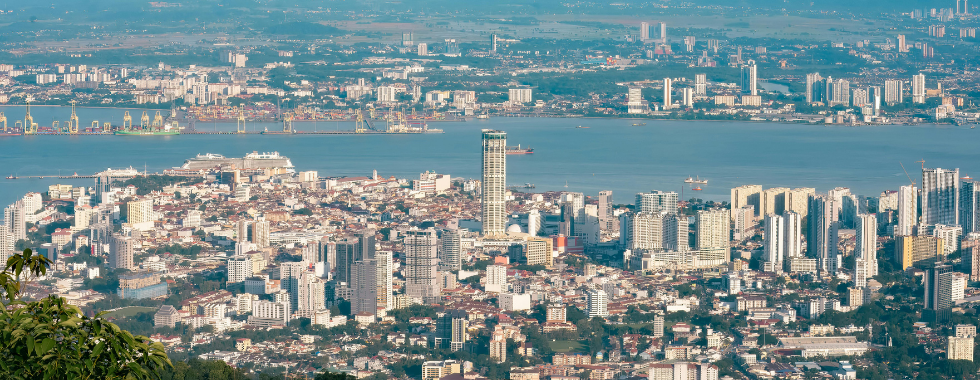
Southeast Asia is uniquely positioned to lead this shift because it now commands the resources to do so. The region is no longer just a participant in the global economy; it is a primary engine of its growth, and, given its geological and sustainability importance, it should also be driving its own Purpose, not following others.
If we can defend intangible metrics like AVE, we can certainly master Purpose metrics. By redirecting even a fraction of that $376 billion toward measured, impact-driven initiatives, Southeast Asia won’t just be participating in the global conversation; it will be setting the international standard. Transitioning your focus and measurement from traditional product marketing to Purpose 2.0 is no longer a nice-to-have; it is the essential evolution of brand marketing.